
Two constructions show up as Orlando souvenir magnets. Both can live on a kitchen door. They fail differently in heat, humidity, and a bag. Printed tin versus die-struck enamel: weight, chip versus scuff, and fridge-door hold.
The souvenir guide is what the souvenir is doing in this city. The fridge guide is steel and grouping. The fridge-memory kit is the cluster this comparison decides a construction for.
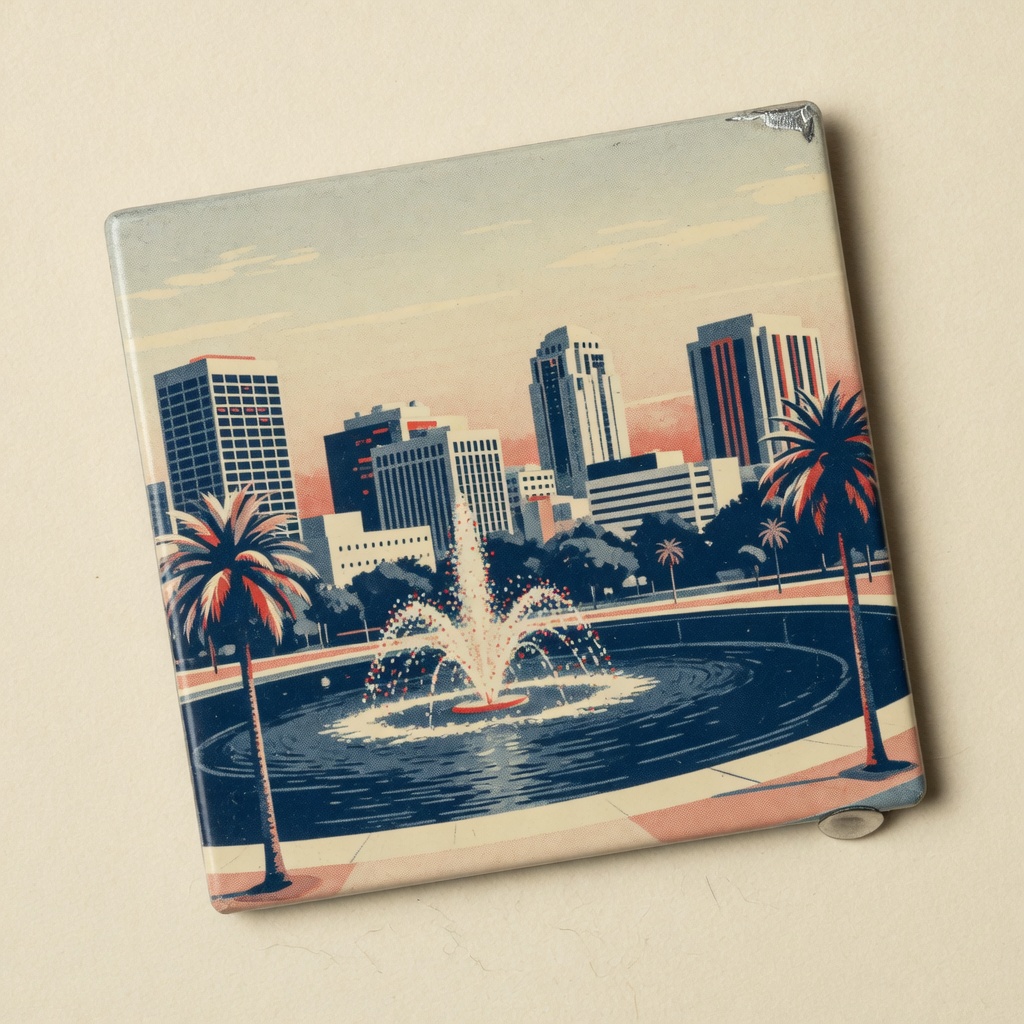
Printed tin souvenir
- A picture on a flexible magnetic sheet, often under a thin coat.
- Light. Corners bend. A rack can stack it in a shallow tray.
- The face scuffs against keys, a zipper, a sunscreen bottle.
- The usual answer when the magnet has to ride in a carry-on pocket.
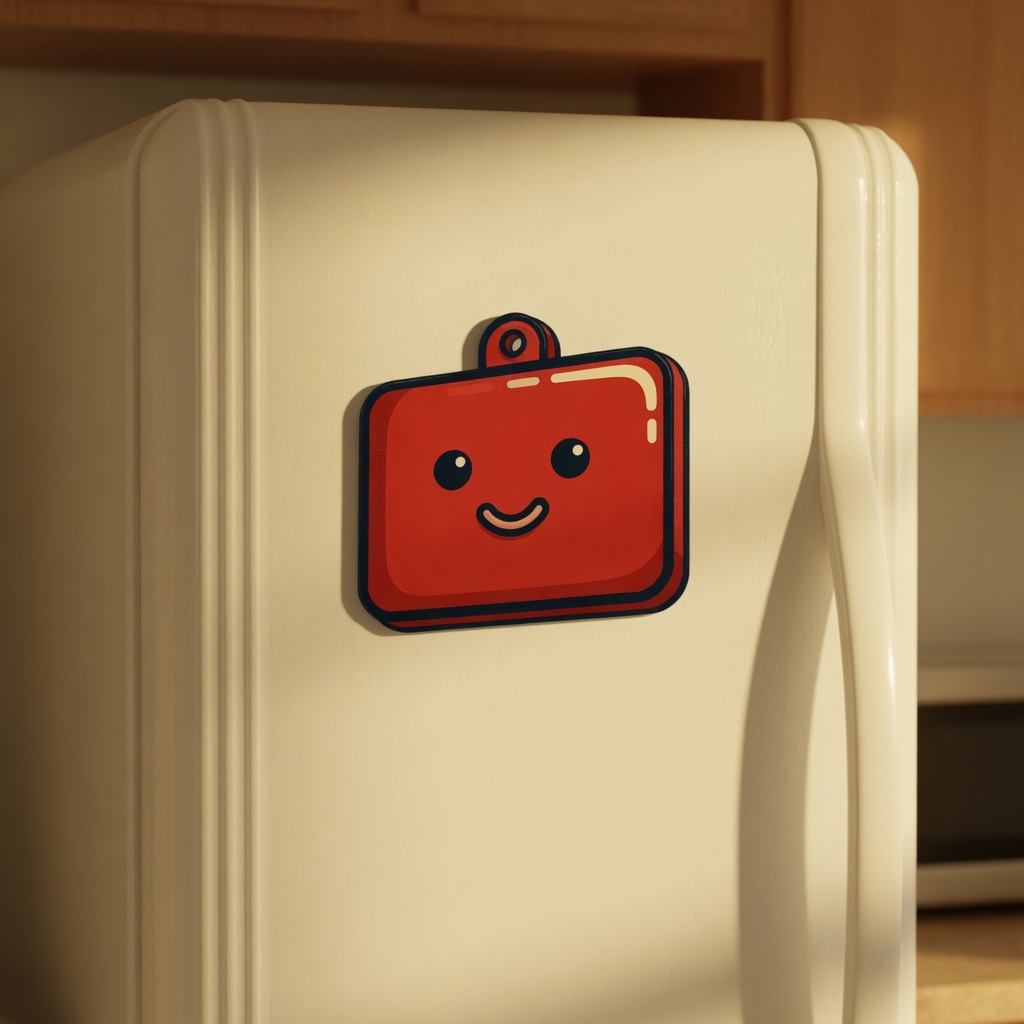
Die-struck enamel plaque
- A metal blank. Color sits in cells outlined by metal. A magnetic pad on the back.
- Weight in the hand. A rim. Some shapes have a hanging tab. The red fridge plaque is that kind of object.
- The face can chip if it drops on hotel tile. It does not bend in a bag the way a sheet magnet does.
- The usual answer when the magnet has to still look like itself after a year of Florida kitchen air.
| Tin souvenir | Enamel plaque | |
|---|---|---|
| Construction | Printed or stamped skin on a flexible magnetic sheet | Die-struck metal blank, color in cells, pad on the back |
| Weight | Almost a card. lighter than enamel of the same face size. | Feels like a plaque. heavier; gauges are not listed here. |
| Face damage | scuffs and clouds when it rubs | chips on impact (tile, a rim hitting another rim) |
| Door hold | Holds on painted steel; may slide on some stainless | Same steel rules; a thicker pad can help, it cannot invent magnetism |
| Bag | Wants a stiff neighbor so corners do not fold | Wrap the face; metal lines scratch color if two plaques kiss |
| Florida heat | A damp paper under the print is a stain | An enamel face wipes after the door sweats |
Heat on a Florida fridge door
July’s normal high at Orlando International Airport is 92.0°F. Afternoon air-conditioning is the other climate of a park week: a lobby at 72°, a rental car that has sat on I-4, a kitchenette that has been running the dishwasher. Open the fridge after that and the skin can sweat.
The Florida Climate Center puts Orlando morning relative humidity at 88 percent for the year, 90 percent in July and 91 percent in August. Condensation on a Florida fridge in summer is ordinary. A tin print under damp paper clouds. An enamel plaque takes a wipe.
Fridge-door hold, cited
| Kind | Door job |
|---|---|
| Tin print | Light, scuffs in a zipper |
| Enamel plaque | Heavier, holds a photo corner |
| Letter tile | Toy stack, fridge alphabet |
Smooth painted refrigerator steel, white, black, or bisque, usually holds a thin magnet. Stainless is not one metal.
Scientific American, in an explainer by materials scientist Thomas Devine, puts the split simply: ferritic stainless steels are generally magnetic; austenitic stainless steels usually are not. Austenitic grades (the family that includes the popular Type 304) keep a crystal structure that does not hold a household magnet well.
GE Appliances says the same thing in kitchen language: stainless steel can vary in its magnetism, and if you are shopping for a fridge you want to use as a bulletin, bring a magnet and test the door. Painted finishes over steel will hold. Some stainless doors will. Some will not.
Lake Nona apartments and new downtown towers lean stainless. Hotel kitchenettes on the International Drive belt are a mix: some painted, some stainless, some half-size doors with almost no field of steel.
Weight, chip, and scuff. Household observations
Weight, chip, and scuff are household observations. Gauges, pull-force numbers, and alloy grades stay off this comparison.
Weight. An enamel plaque with a decent magnetic pad is usually heavier than a tin print of similar face size. Extra mass plus a thicker pad can help on a painted door that already holds. It cannot invent magnetism on austenitic stainless. If a thin souvenir slides, try the enamel plaque, then a side wall, then accept that the door skin may not be magnetic.
Chip versus scuff. Enamel chips when a rim hits hotel tile or another metal line. Tin print scuffs when it rubs a zipper, keys, or a sunscreen bottle. Wrap either face for the bag; the travel guide is that lesson. They fail differently.
Hold. GE’s magnet-on-door test is the public method: test the steel you have. A heavier enamel piece has a better chance than a very thin tin print on a weakly magnetic door. No plaque holds on steel that is not magnetic.
Which magnet for which week
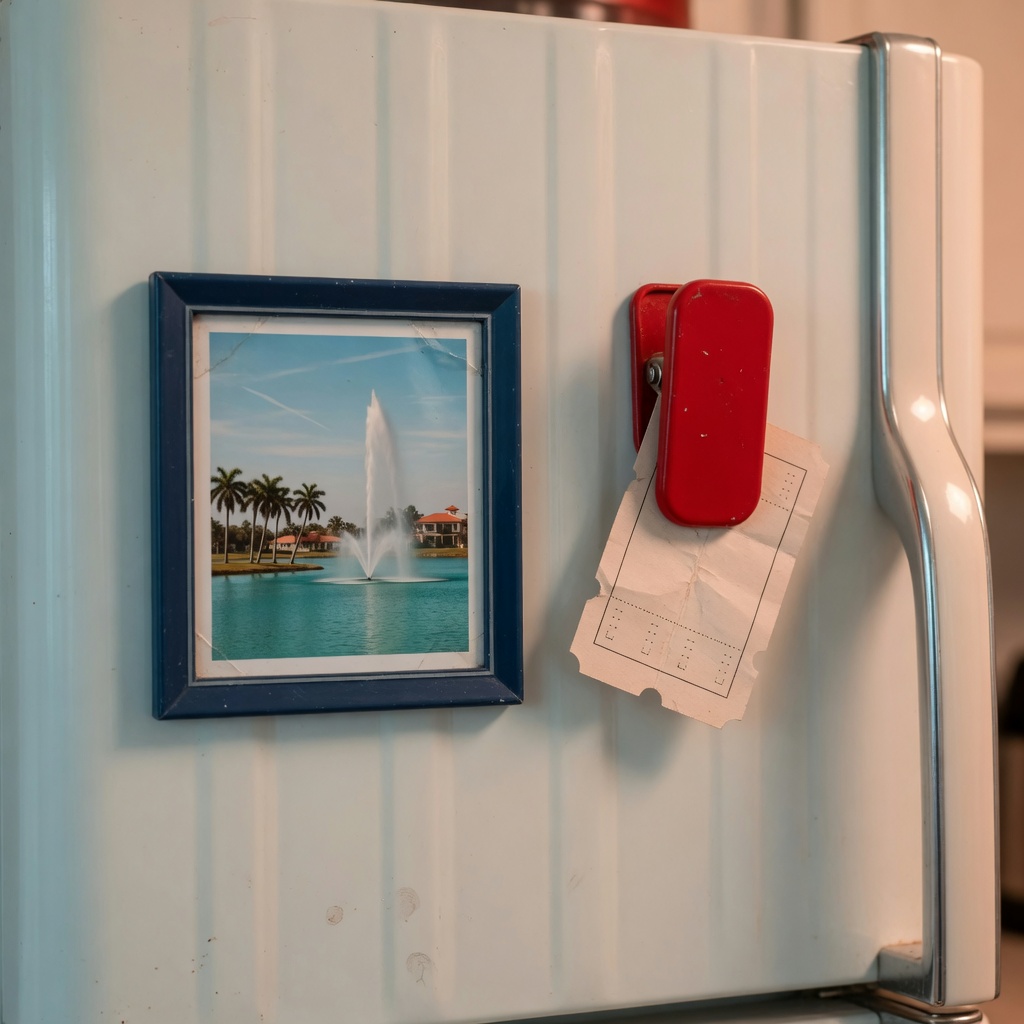
Choose tin when the magnet has to be light and flat in a carry-on pocket, and the door at home is painted steel. Choose enamel when the magnet has to survive Florida kitchen air and still look like a plaque after humidity. Navy rim, color in the face.
A fridge-memory kit can hold both: the tin souvenir as this trip’s sentence, the enamel plaque as the piece that stays. Clips and a frame are paper jobs, not construction jobs. Read the kit before you load a French door like a wall.
Publisher: Orlando Magnet Company and Tabaconda LLC. Prefer email? Use our contact page.